
Define the thermal interface, mechanical envelope and acceptance plan before ordering a custom copper heat sink.
01Start with the interface, not just a processor name
A custom copper heat sink enquiry becomes useful when it describes the interface between the heat source, the cooling component and the enclosure. A processor name or a request for maximum cooling leaves important decisions unresolved. Establish which component needs cooling, where heat enters the part and what space is available around it.
OY Precision accepts enquiries for custom copper heat sinks for computer and server applications. The copper grade, geometry, manufacturing route and inspection scope need review for the particular design. A quotation for a component should also identify who is responsible for system thermal validation.
02Define the thermal boundary and installation envelope
Concept schematic — not a thermal design, production drawing or company product example. Define these interfaces in your project brief.
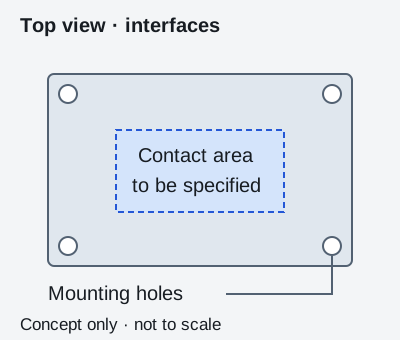
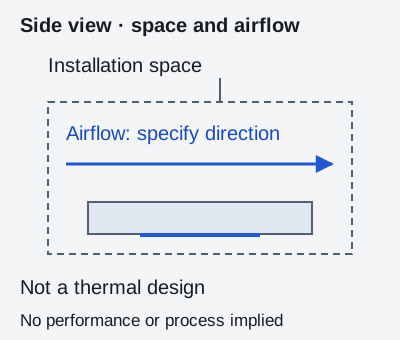
Provide the heat load and operating conditions supplied by your system designer, together with the permitted component temperatures. Identify where temperature will be measured and which workload represents the intended operating case. If those inputs are not settled, list them as open items; do not turn an assumed wattage into an acceptance requirement.
For the mechanical envelope, show the available height, contact footprint, nearby connectors, memory modules and fasteners. Include installation and removal access. Ask whether the proposed part can be assembled without interference, rather than checking its overall length and width alone.
03Treat airflow and contact as separate requirements
Heat sink performance depends on the complete thermal path, including the interface and the air moving between the fins. Celsia’s heat sink design guidance explains that tightly packed fins can restrict airflow. More fins alone do not establish that a component will cool better in the intended computer or server.
Ask the system designer to identify airflow direction, local inlet conditions, ducting and nearby obstructions. Separately identify the thermal interface material and the approved contact and mounting requirements. Intel’s desktop guidance likewise emphasizes chassis airflow. A component drawing cannot replace validation in the intended assembly.
Technical reference: Celsia: Heat Sink Design Fundamentals; Intel: Thermal Management Recommendations for Boxed Desktop Processors
04Name the copper requirement and leave the process open for review
Write the required copper designation and condition, or explain that material selection remains open. Specify any material certificate or traceability requirement for the order. An approved material designation is clearer than a description such as pure copper; the grade and supply form still need to be reviewed for the particular part.
Distinguish a solid component from an assembly with joined fins or other elements. If your drawing depends on a specific construction method, identify it for the manufacturing review. Agree on the proposed process, component scope and any separate thermal design or validation work before starting the project.
05Compare against the requirement, then define a sample
Is copper or aluminum the better heat sink? Choose against the assembly’s thermal, weight, geometry and commercial requirements, rather than treating the material name as a performance guarantee. Where a comparison matters, ask for proposed designs and a test plan under the same operating conditions. Do not compare unexplained temperature figures from different systems.
For example, a buyer replacing a cooling component could identify the contact region, mounting pattern and maximum envelope before asking about a different fin arrangement. The following is an illustrative purchasing example, not an OY project or a validated design.
Scroll sideways to compare all columns.
| Item to define | Illustrative buyer instruction |
|---|---|
| Contact surface | Identify the contact region and drawing requirements approved by the system designer. |
| Mounting | Provide the hole pattern, fasteners and approved assembly instructions. |
| Sample acceptance | Separate dimensional checks from the system thermal test and name the responsible party. |
06Agree on what manufacturing inspection will establish
Identify the dimensions, contact surface requirements, fin condition and cleanliness checks needed for the delivered component. Ask how sensitive surfaces and thin features will be protected during handling. If a coating or plating is specified, define where it applies and which contact regions must remain untreated.
Keep dimensional acceptance separate from thermal acceptance. A sample that matches its drawing is not automatically qualified for a server platform. Record the hardware configuration, interface material, assembly procedure and test conditions used for the customer’s thermal evaluation, and agree what happens if the sample needs revision.
07Copy this heat sink interface brief
Use the fields below to expose the decisions specific to cooling hardware. This is a technical discussion aid; it does not include a thermal guarantee, a confirmed manufacturing method or a fixed development schedule.
- Heat source and contact footprint:
- Operating heat load, inlet conditions and temperature measurement location:
- Available envelope, keep-out regions and airflow direction:
- Approved interface material and mounting requirements:
- Copper designation, condition and documentation requirement, or open material question:
- Contact surface, fin and cleanliness requirements:
- Dimensional acceptance owner and system thermal validation owner:
- Sample test conditions and revision approval process:
08Discuss the component scope
Send the known interface requirements and identify any missing design inputs. OY can review the copper heat sink enquiry alongside your drawings or description; the supply scope, material and manufacturing arrangements must be agreed before an order.