
Choose an alloy together with its temper, product form and acceptance requirements, especially when a profile also needs secondary machining.
01An alloy number is only the start of the decision
For a machined bracket or an industrial profile, “6061 or 6063?” is not a complete purchasing specification. The answer needs a product form, temper, governing specification and the characteristics that matter in service. A catalogue comparison can help start the discussion, but it cannot approve a substitution for a particular assembly.
Use the alloy decision to connect design needs with available stock and the proposed manufacturing route. That approach is more useful than treating one grade as universally stronger, cheaper or easier to obtain. OY reviews aluminum enquiries as part of its broader work with precision metal components; acceptance of a particular material remains project-specific.
02Understand the usual starting points
Hydro’s 6061 extrusion datasheet describes the alloy as a structural option for medium to high strength requirements and lists several extruded product forms. That makes 6061 a material worth reviewing when a part’s mechanical requirements are important. It does not establish a design allowable for every temper, thickness or stock form.
Hydro’s 6063 extrusion datasheet highlights surface appearance, anodizing response and profile applications. Its mechanical tables distinguish tempers and dimensional conditions. For an appearance-sensitive profile, 6063 may therefore be a relevant candidate, but the selected section still needs to meet the project’s mechanical and dimensional requirements.
Technical reference: Hydro: Alloy 6061 extrusion datasheet; Hydro: EN AW-6063 extruded products technical datasheet
03Compare complete specifications, not isolated numbers
If strength figures appear in a comparison, first check that they refer to a relevant temper, product form, thickness range and test basis. Do not compare a minimum value in one document with a typical value in another as though both were guaranteed delivery properties. This is why an unexplained two-column strength table can mislead a buyer.
Ask what condition the material must be in when supplied and whether later fabrication changes the acceptance requirement. Hydro notes that welding can reduce strength in the weld region of 6061 in T6 condition. A welded component therefore needs a design review that goes beyond the incoming alloy label.
Technical reference: Hydro: Alloy 6061 extrusion datasheet
04Consider the starting shape and secondary operations
Partner-facility photograph: profile sections with visible secondary features. This photograph does not establish a 6061 or 6063 alloy grade, temper or specification.
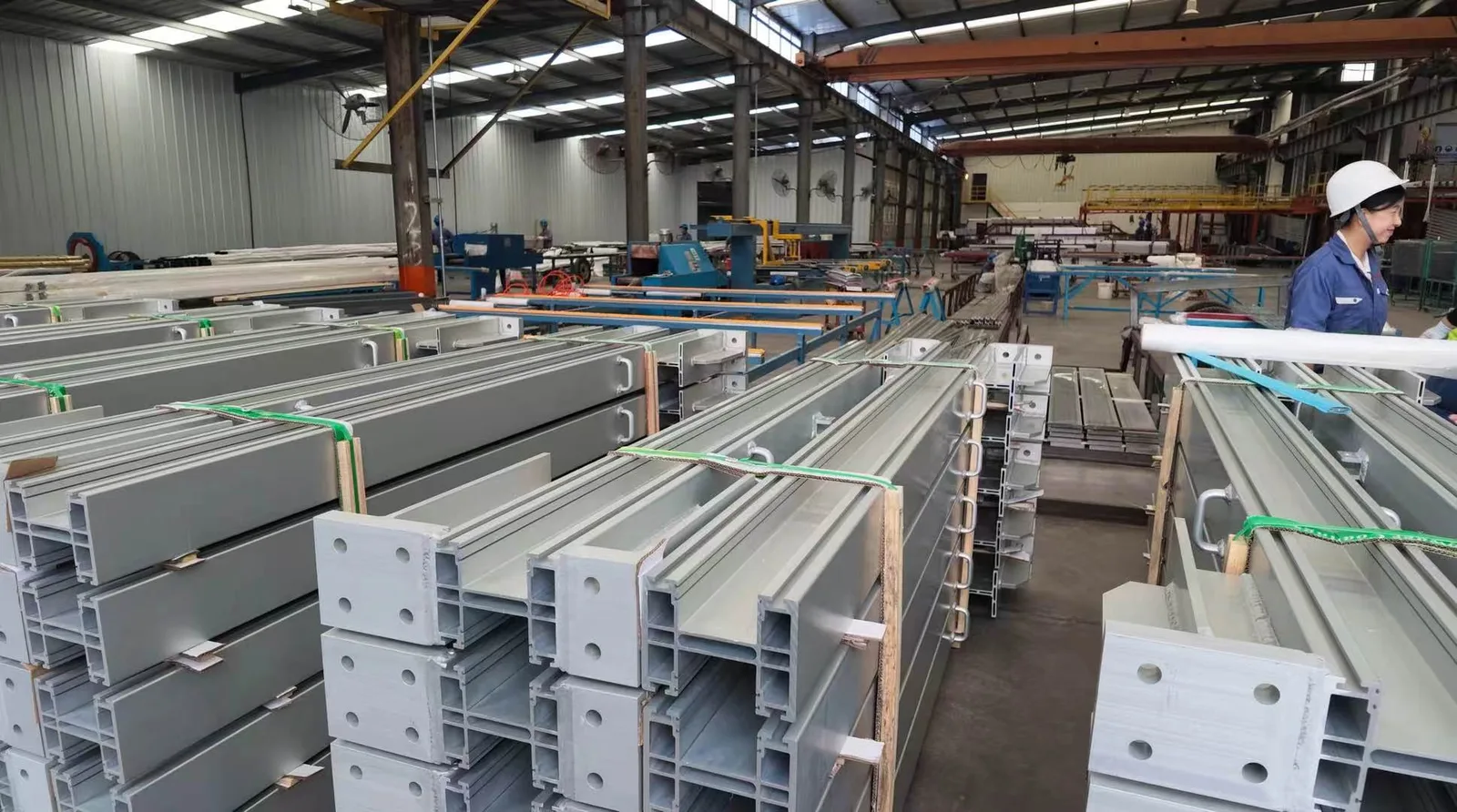
Hydro’s architectural channel guidance describes 6063 as machinable while comparing its machining behavior less favorably with harder alloys such as 6061. Treat that as a general selection consideration, not a universal cycle-time prediction. The actual part geometry, condition and required finish still need review.
For a part made from bar or plate, ask which stock form suits the geometry. For a profile, identify which features belong to the continuous cross-section and which will be added later, such as holes, end details or local pockets. Confirm the available section and machining scope rather than assuming that changing the alloy leaves the whole route unchanged.
Technical reference: Hydro: Architectural Aluminum Channel, alloy comparison
05Use the part requirements to structure the comparison
The table below is an illustrative decision aid, not a record of OY production or a material recommendation. It shows why a compact machined component and a visible profile can lead to different questions even when both are called aluminum parts.
Scroll sideways to compare all columns.
| Buying situation | Question to prioritize | What to request |
|---|---|---|
| Machined mounting component | Which interfaces and mechanical requirements govern the design? | Proposed alloy, temper, stock form and supporting specification. |
| Visible industrial profile | Does the section meet the mechanical and appearance requirements? | Available section, temper and an agreed finish reference. |
| Profile with added holes or pockets | Which dimensions are controlled in the profile and after machining? | Separate profile and secondary-feature requirements. |
| Suggested alloy substitution | Which approved requirement would change? | Written comparison and design-owner approval before acceptance. |
06Define appearance and compare like-for-like quotations
If appearance matters, identify visible surfaces and agree how a sample will be assessed. Hydro’s guidance on 6063 points to smooth surfaces and suitability for anodizing, but that is not a promise of an exact color match. A buyer should specify the actual finish reference instead of relying on the phrase good anodizing.
Compare quotations using the same quantity, product form, section, temper, finish and documentation requirements. A lower material line does not automatically mean a lower delivered component cost. Ask whether the proposal includes the required secondary features and packaging. Availability, tooling and the supplied scope should be explicit rather than guessed from the alloy number.
Technical reference: Hydro: Architectural Aluminum Channel, alloy comparison
07Copy this material-selection note
Use this note when the grade is undecided or a supplier proposes an alternative. It focuses on material selection rather than repeating a full RFQ checklist. Keep the final approval with the person responsible for the part specification.
- Part function and governing mechanical requirements:
- Product form: bar, plate, tube or defined profile section:
- Proposed alloy and temper, with specification and dimensional applicability:
- Features made in the starting section and features added by machining:
- Finishing process, visible surfaces and appearance reference:
- Material documentation and traceability required for this order:
- Substitutions permitted only after approval by:
08Bring the comparison back to your part
Share the proposed section or component geometry and explain why the alloy is being considered. If the design already specifies a grade and temper, identify any proposed change clearly. OY can review the enquiry and discuss material and manufacturing arrangements; neither grade is guaranteed suitable or available for every project.